

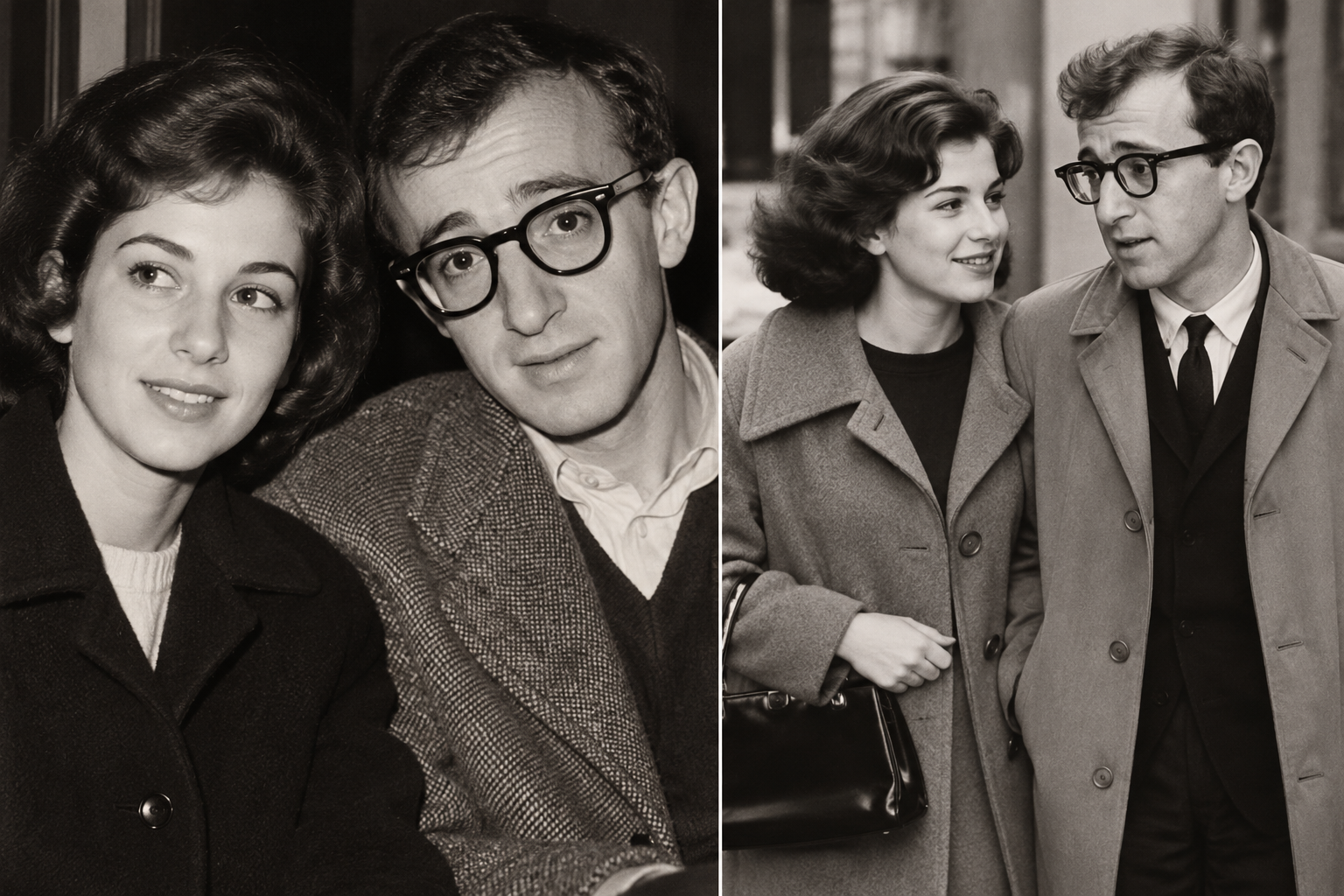
Harlene Rosen is best known as the first wife of filmmaker and comedian Woody Allen. Yet her own story remains surprisingly private. She entered Allen’s life long before he became an internationally known filmmaker. They married in 1956, when both were very young. Rosen was only 17, while Allen was 20. Their marriage later ended, and parts of their relationship became material in Allen’s comedy. This eventually created a public and legal dispute between the former couple.
What makes Rosen interesting today is not celebrity fame or a long entertainment career. Instead, people are curious because so little reliable information about her exists. Many websites publish claims about her age, wealth, career, and current life. However, strong sources do not confirm many of those details. This article explores what reliable records tell us, where sources disagree, and why Rosen largely disappeared from public attention.
Who Is Harlene Rosen?
Harlene Rosen is an American woman primarily known because of her marriage to Woody Allen. She became his first wife years before films made him a household name. Unlike many people connected with famous Hollywood figures, Rosen did not build a public career around that relationship.
Her place in entertainment history comes mainly through biographies about Allen. That creates an important problem for anyone researching her. Much of her story has been told through information about her former husband rather than through Rosen herself. A 1991 Los Angeles Times review of an Allen biography even criticized this imbalance. The reviewer questioned why Rosen’s perspective was missing when the marriage was discussed.
This matters because one person’s memories cannot automatically tell the full story of a relationship. When researching Rosen today, careful readers should separate documented events from stories repeated online. That approach creates a much fairer picture of someone who has spent most of her life outside public attention.
Harlene Rosen’s Early Life
Very little dependable information about Rosen’s childhood and family background is publicly available. This is one area where modern celebrity websites often go beyond what reliable historical records can support.
What is well established is that Rosen was extremely young when she married. Reliable biographical sources describe her as 17 years old at the time of her 1956 wedding. Allen was 20. Some biographical references also describe Rosen as a student during this period.
Those ages help readers understand their relationship in context. They were not an established Hollywood couple enjoying fame and wealth. They were two very young people beginning adult life while Allen was still developing his career.
Readers should therefore be cautious with websites claiming to know detailed facts about Rosen’s childhood, exact modern lifestyle, wealth, or private family relationships. Limited public information does not mean those details are mysterious. It simply means they have not been reliably documented for the public.
How Harlene Rosen and Woody Allen Became Connected
The relationship began before Woody Allen reached the level of fame he later enjoyed. This is an important part of Rosen’s story because people sometimes view the marriage through the lens of Allen’s later success.
That would give a misleading picture.
During the 1950s, Allen was still developing professionally as a comedy writer. He had not yet created the famous movies that would later define his public career. Rosen therefore knew him during a much earlier stage of his life.
Published biographies provide much more information about Allen than Rosen. This makes it difficult to reconstruct their courtship from both sides. Details about what attracted them to each other or how Rosen personally viewed the relationship should not be invented simply to create a more dramatic story.
What can be said safely is that their relationship became serious while both were young. It led to marriage in 1956 and placed Rosen beside Allen during an important period in his developing comedy career.
Harlene Rosen and Woody Allen Married in 1956
One of the strongest documented dates in Rosen’s biography is March 15, 1956. A published chronology in Woody Allen: A Casebook records their marriage on that date.
According to the chronology, Allen had moved to Los Angeles for television work. Rosen joined him there, and the couple married. They later returned to New York after the television program closed.
The ages of the newlyweds are particularly striking today. Rosen was reportedly 17 and Allen was 20. Their youth provides important context when looking at what happened later.
This was also years before Allen became widely recognized as a filmmaker. His major movie career belonged to the future. During this period, he was working to establish himself as a comedy writer and eventually a performer.
For Rosen, the marriage placed her alongside someone whose professional life was beginning to change quickly. Yet surviving public records provide far less information about her own ambitions and personal experiences during those years.
What Was Their Marriage Like?
There is no complete public record showing the marriage from both perspectives. That limitation should be kept in mind when reading descriptions of their relationship.
A great deal of what became publicly known about the marriage came through Allen’s comedy and later biographical writing about him. Rosen did not maintain a similar public platform. As a result, the historical record is naturally uneven.
Allen increasingly developed his identity as a comedy writer and performer during this period. Personal experiences and relationships could become material for jokes. His marriage and former wife eventually became part of that material.
This is where the story becomes more complicated. Humor based on private relationships can appear very different depending on who is telling the story. What an entertainer considers comedy may feel humiliating to the person being discussed.
That tension eventually became important in Rosen’s relationship with her former husband and contributed to one of the most widely reported events involving her: a defamation dispute.
When Did Harlene Rosen and Woody Allen Separate?
The timeline surrounding the end of the marriage requires careful explanation because published sources do not fully agree.
Some biographical accounts describe the marriage as lasting from 1956 until 1959. Other established references place the divorce in the early 1960s. For example, a chronology published in Woody Allen: A Casebook lists a divorce in 1961. EBSCO’s biography states that the couple divorced in 1962.
These dates should not simply be blended together and presented as one proven timeline.
One possible explanation is that the couple separated before their divorce became legally final. However, without relying on a directly verified divorce judgment, readers should treat that explanation cautiously.
The safest summary is simple: Rosen and Allen married in 1956. Their relationship broke down several years later, and sources disagree about the precise year used for its formal ending.
This small detail illustrates a larger lesson about researching older celebrity biographies. Repetition across websites does not necessarily make a date correct.
Why Different Sources Give Different Divorce Dates
Readers searching for Harlene Rosen often encounter 1959, 1961, and 1962. That can make a simple biography surprisingly confusing.
The problem comes partly from different references describing the end of the relationship differently. Some accounts use 1959 when describing the marriage as effectively over. A published Routledge chronology places their divorce in 1961. Meanwhile, EBSCO gives 1962 as the divorce year.
This is why responsible biographical writing should acknowledge the disagreement rather than hide it.
Separation and legal divorce can occur at different times. That could explain some differences, but it should not be stated as proven without the relevant primary legal record.
For everyday readers, the key point does not change. The couple married in 1956 while they were very young. The relationship ended after only several years.
For researchers and publishers, however, the conflicting dates are important. They show why checking sources matters, even when researching apparently simple biographical facts.
Harlene Rosen and Woody Allen’s Comedy
One of the most discussed parts of the story concerns Allen’s use of his former marriage in comedy.
As Allen developed as a stand-up performer, relationships and personal experiences became material. Rosen was sometimes discussed in ways she apparently considered insulting. Reports about their dispute show that the matter went beyond ordinary discomfort between former spouses.
A Los Angeles Times review published in 1991 states that Rosen had sued Allen and NBC for $1 million, claiming that his jokes had defamed her. Other biographical sources also describe a defamation action connected with remarks Allen made about his former wife.
This episode is important because Rosen is often reduced to a minor name in Allen’s biography. The legal dispute shows that she was not simply a silent character in someone else’s comedy.
At some point, she challenged how she was being represented publicly. That remains one of the clearest documented examples of Rosen responding to her former husband’s public treatment of their relationship.
The Defamation Dispute Explained
The lawsuit is frequently mentioned in biographies, but writers should avoid exaggerating what surviving secondary sources establish.
Allen made jokes about his former wife, and Rosen objected strongly enough to pursue a defamation claim. The Los Angeles Times later reported that Rosen had sued Allen and NBC for $1 million.
The episode raises an interesting question about the boundary between comedy and personal reputation. Comedians often transform real experiences into material. Yet the real people involved may not agree with how those experiences are presented.
For Rosen, this was particularly significant because Allen had the public platform. Audiences heard his version of events through comedy performances and media appearances. Rosen did not have an equivalent public voice.
Reliable public sources are much clearer about the existence of the dispute than about every legal detail or its final resolution. Articles should therefore avoid inventing settlements, court outcomes, or financial payments without strong documentation.
The responsible approach is to describe what is established and acknowledge what remains unclear.
Why Harlene Rosen’s Perspective Matters
There is a deeper issue behind Rosen’s biography. Most surviving discussions of her were created because people were writing about Woody Allen.
This can make a person appear like a supporting character in someone else’s life.
The problem was noticed decades ago. A 1991 Los Angeles Times review of Eric Lax’s biography of Allen specifically questioned the absence of Rosen’s voice. The reviewer noted that their relationship was being presented from Allen’s point of view.
That observation remains useful today.
When one member of a former couple becomes extremely famous, his or her version of events can dominate the historical record. Stories may then be repeated for decades until readers begin treating them as neutral facts.
Rosen’s limited public profile reminds us to ask basic questions. Who originally told this story? Was the other person interviewed? Is the claim supported independently?
Those questions are valuable not only for Rosen’s story but for celebrity biographies in general.
Did Harlene Rosen Ever Speak About Woody Allen Later?
There is evidence that Rosen eventually participated in research concerning Allen many years after their marriage.
David Evanier’s biography Woody is particularly relevant. The publisher’s description says Evanier interviewed people connected with Allen, including his first wife. It describes Rosen as someone who had not spoken publicly about him since their divorce decades earlier.
That detail makes Evanier’s work important for people studying Rosen because it provides something missing from many earlier accounts: an attempt to include her perspective.
However, this does not suddenly create a complete public biography of Rosen. Her life after the marriage remains largely outside the public record.
That distinction matters.
An interview connected with a biography does not mean someone has become a public personality. Rosen still appears to have maintained a remarkably private existence compared with the celebrity surrounding her former husband.
Her limited public participation should therefore not be used as permission to speculate about unrelated areas of her life.
What Happened to Harlene Rosen After the Divorce?
This is one of the most searched questions about Rosen, yet it has one of the shortest reliable answers.
Her later life is not well documented publicly.
There are many online pages claiming to provide detailed information about where she lives, what career she followed, how much money she has, or what she does today. Those claims deserve careful checking before publication.
Strong accessible sources mainly document Rosen through her connection with Allen, their marriage, the later dispute, and occasional biographical research.
There is nothing unusual about this lack of information. Rosen did not spend decades building a public entertainment career. She had no obligation to remain visible simply because the person she once married became famous.
This is an important point for modern readers. Privacy should not be mistaken for mystery.
Sometimes the most accurate answer to a biographical question is simply that dependable public evidence does not tell us more.
Did Harlene Rosen Have a Hollywood Career?
There is no strong evidence showing that Rosen developed a major public career as an actress, filmmaker, or Hollywood celebrity.
That may sound obvious, but it is worth stating because modern celebrity sites often build extensive profiles around people whose fame comes mainly through a relationship.
Rosen’s public identity developed very differently. She became historically notable because she was Allen’s first wife during his early career. Her name later remained connected with biographies about him and discussions of his stand-up comedy.
This should not be confused with having an entertainment career of her own.
A responsible profile should therefore avoid adding unsupported occupation labels simply to fill a biography table.
Her absence from Hollywood credits also helps explain why information about her is limited. Actors, directors, and writers leave behind interviews, credits, promotional materials, and industry records. Private individuals usually do not.
Rosen’s smaller public footprint is therefore understandable rather than mysterious.
Did Harlene Rosen and Woody Allen Have Children?
Reliable biographical summaries do not identify children from Rosen and Allen’s marriage.
This is another area where careful wording matters. Saying that established accounts do not document children is safer than creating detailed claims about their private family life without primary evidence.
Their relationship began when both were very young and ended after several years. Allen later remarried and had other widely documented relationships, which became part of his much larger public biography.
Rosen took a different path.
Because she largely remained outside public life, searches about her family can quickly lead to poorly sourced websites. Readers should avoid assuming that a polished biography page is automatically accurate.
The same rule applies to claims about Rosen’s parents, siblings, later relationships, and descendants. Unless a trustworthy source documents those details, they should remain outside a factual biography.
Good research is sometimes defined as much by what a writer leaves out as by what the writer includes.
How Old Is Harlene Rosen?
Rosen’s exact birth date is another detail that should be treated carefully.
The strongest widely available fact is her reported age at marriage. Multiple biographical references say she was 17 when she married 20-year-old Allen in 1956.
That provides a rough birth-year range. However, calculating an exact birth date from an age is not reliable enough to present as established fact.
Some modern websites list a specific birth year or age. Those figures may be repeated from other biography pages rather than sourced from a primary record.
This distinction is important for SEO writers. Search engines reward helpful answers, but helpful does not mean pretending uncertainty does not exist.
A better answer is transparent: Rosen was reported to be 17 when she married in March 1956, but dependable public sources provide limited information about her exact birth details.
That answer may be less dramatic, but it is more trustworthy.
What Is Harlene Rosen’s Net Worth?
There is no reliable public evidence establishing Rosen’s current net worth.
Celebrity net-worth estimates often spread quickly online because readers search for them. Yet a number appearing on several websites does not prove that anyone has examined bank accounts, investments, property records, debts, or other financial information.
This problem becomes even greater with private individuals.
Rosen has not maintained a public business or entertainment career that would allow outsiders to make even a reasonable estimate based on disclosed earnings. Therefore, assigning her a specific fortune would create a false sense of certainty.
Readers searching for “Harlene Rosen net worth” should treat unsupported figures cautiously.
Her marriage to a famous filmmaker also does not provide a sound basis for estimating her personal finances decades later.
From an E-E-A-T perspective, saying “reliable information is unavailable” is more valuable than repeating an attractive but unsupported number. Accuracy should always come before filling every possible search query.
Why Is So Little Known About Harlene Rosen Today?
The answer is simpler than many dramatic online headlines suggest: Rosen has largely lived outside public attention.
She became connected to a person who later achieved worldwide fame. That does not mean she chose celebrity life herself.
Most public information about Rosen comes from the period surrounding her relationship with Allen. Once that chapter ended, the media had fewer reasons to document her daily life.
The internet sometimes treats missing information as a puzzle that must be solved. That approach can encourage speculation. A private person suddenly receives an invented career, estimated wealth, assumed address, or unsupported family history because an article wants to appear complete.
A better approach respects the limits of available evidence.
Rosen’s privacy is actually one of the most important facts about her later story. Decades after a short youthful marriage connected her with a future celebrity, she did not turn that relationship into a continuing public identity.
Why Harlene Rosen Still Attracts Public Interest
Interest in Rosen comes partly from Woody Allen’s long career. People researching famous filmmakers naturally become curious about their early relationships.
But Rosen’s story offers something else as well.
It shows how celebrity history can preserve one person’s voice while almost losing another’s. Allen became a major public figure whose interviews, performances, films, and biographies created an enormous historical record. Rosen did not.
As a result, researchers can easily learn what Allen reportedly thought about the marriage while finding far less about what Rosen experienced.
That imbalance makes careful sourcing essential.
Her story also demonstrates why modern biography writing should not simply copy older narratives. Writers should identify whose perspective created those narratives and whether independent evidence supports them.
In that sense, Rosen is more than a footnote in a celebrity marriage. Her limited public record provides a useful example of how fame shapes which personal stories survive.
Common Misconceptions About Harlene Rosen
One common mistake is assuming that every detail appearing on biography websites has been verified. Rosen is a perfect example of why that approach can fail.
Claims about an exact birth date, modern occupation, current residence, wealth, and later family life may appear authoritative because they are displayed in neat profile tables. Presentation is not evidence.
Another misconception concerns the end of her marriage. Different sources provide different dates, so presenting one year without explanation can mislead readers.
Finally, Rosen should not be described as someone who “disappeared” in a mysterious sense. There is no evidence that her privacy represents some unexplained event.
A more reasonable conclusion is that she simply did not maintain a major public profile.
These distinctions may seem small, but they improve the quality of biographical content. Trustworthy writing acknowledges gaps rather than filling them with guesses.
What Harlene Rosen’s Story Teaches Us About Celebrity Biographies
Rosen’s story provides a valuable lesson for anyone reading celebrity content online.
Search results can create an illusion of certainty. Ten websites may repeat the same date, financial estimate, or personal detail. Yet all ten could ultimately be copying one weak source.
Reliable research works differently.
Important facts should be traced to credible biographies, established publications, interviews, historical records, or primary documents whenever possible. Conflicting information should be disclosed rather than silently changed.
Rosen’s marriage provides a clear example. Sources agree strongly on the 1956 wedding, while the timeline surrounding separation and divorce varies. Good writing tells readers about that variation.
This approach may not produce the most sensational article, but it creates something better: useful information readers can trust.
For Rosen especially, responsible research also respects the fact that a person connected with a celebrity does not automatically surrender all expectations of privacy.
FAQs
1. Who is Harlene Rosen?
Harlene Rosen is best known as the first wife of filmmaker and comedian Woody Allen.
2. When did Harlene Rosen marry Woody Allen?
She married Woody Allen on March 15, 1956. She was reportedly 17 years old.
3. How old was Woody Allen when he married Harlene Rosen?
Woody Allen was 20 years old when the couple married in 1956.
4. When did Harlene Rosen and Woody Allen divorce?
Sources differ on the exact year. Their marriage ended several years after their 1956 wedding.
5. Did Harlene Rosen sue Woody Allen?
Yes. Rosen reportedly filed a defamation lawsuit related to jokes Allen made about her.
6. Where is Harlene Rosen now?
Reliable information about her current life is limited because she has largely remained private.
Conclusion
Harlene Rosen occupies an unusual place in entertainment history. She married Woody Allen in 1956, when she was reportedly only 17 and he was 20. Their relationship belonged to a period before Allen became one of the most recognizable filmmakers of his generation. The marriage ended after several years, although published sources differ on the exact divorce timeline. Later, Rosen challenged the way she had been portrayed in Allen’s comedy through a reported defamation action.
Yet perhaps the most important part of her story is what happened afterward. She did not build a celebrity identity around her former marriage. Instead, she largely remained outside public attention.
That makes responsible research especially important. Claims about her present life, exact age, wealth, career, and family should not be invented simply because readers are curious.
The available evidence gives us a limited but meaningful picture: a very young woman who became part of a future celebrity’s early life, later objected to her public portrayal, and ultimately maintained a level of privacy that has lasted for decades.